
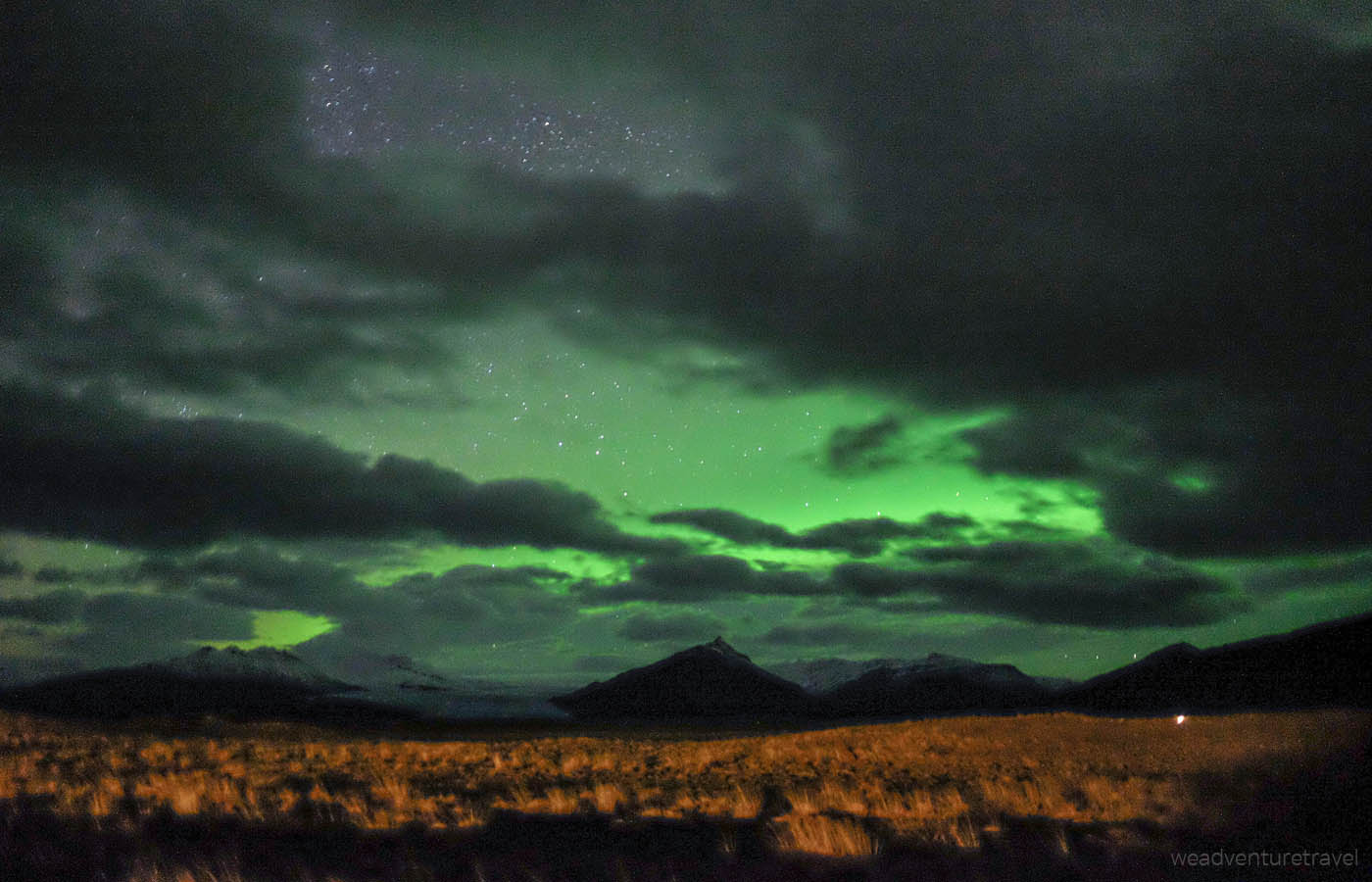
But when Aurora, daughter of the dawn, with rosey lustre purpled o’er the lawn.
— Homer
The northern lights have been written about since ancient times and demonstrates a phenomena that continues to capture the human imagination for millennia.
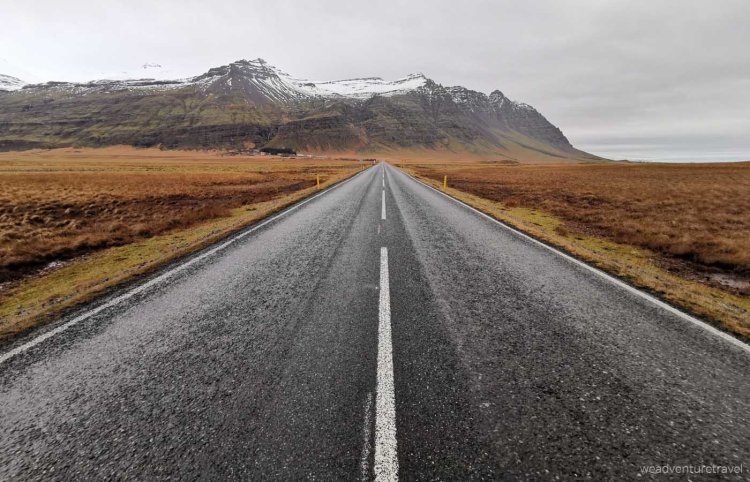
It’s wintertime and many of us have dreamed of seeing the northern lights for ages. While the northern lights happen year-round, it usually takes a northern location, dark and clear skies to see them. Luckily, you don’t necessarily need to travel beyond a country like Iceland for a chance to see them.
Here are a few critical things that you should know and some easy steps to take in advance in order to maximize your chances of seeing the aurora and make for an overall better experience when that time comes. One benefit of going to Iceland is that even if you don’t wind up not seeing the aurora, you will still well salvage your time with tons of gorgeous scenery and all of the charming towns and great culture.
Experiencing the northern lights is a dream
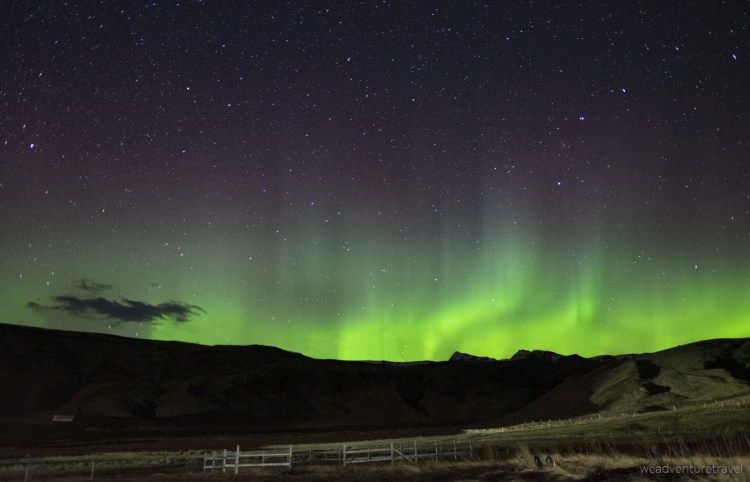
It was about this time last year that I was pretty far north in the Canadian Northwest Territories – the town of Inuvik to be exact. I had traveled there as an automotive journalist with the Mazda motor corporation on a fantastic press drive, called the Mazda CX Arctic Drive – celebrating the CX lineup of vehicles at the time. We had a free night at the end of the epic 8-day road trip, and therefore, there was a chance we would see the northern lights, and indeed they did appear. But I freakin’ missed the phone chain at 3 O’clock in the morning alerting us that the aurora was visible.
Yes, I could’ve kicked myself that morning upon realizing that I had missed it – and was almost too much to bear since it was a such deep seeded and longtime dream of mine to see them. Boarding the Air North flight that day out of the Arctic Circle that day, I allayed my frustration by quietly saying to myself … “This just means you need to come back one day and see them – whether that’s years or decades away, but you will.” Well little did I know at the time that seeing the northern lights was less than a year away.
Woohoo Iceland, here we come
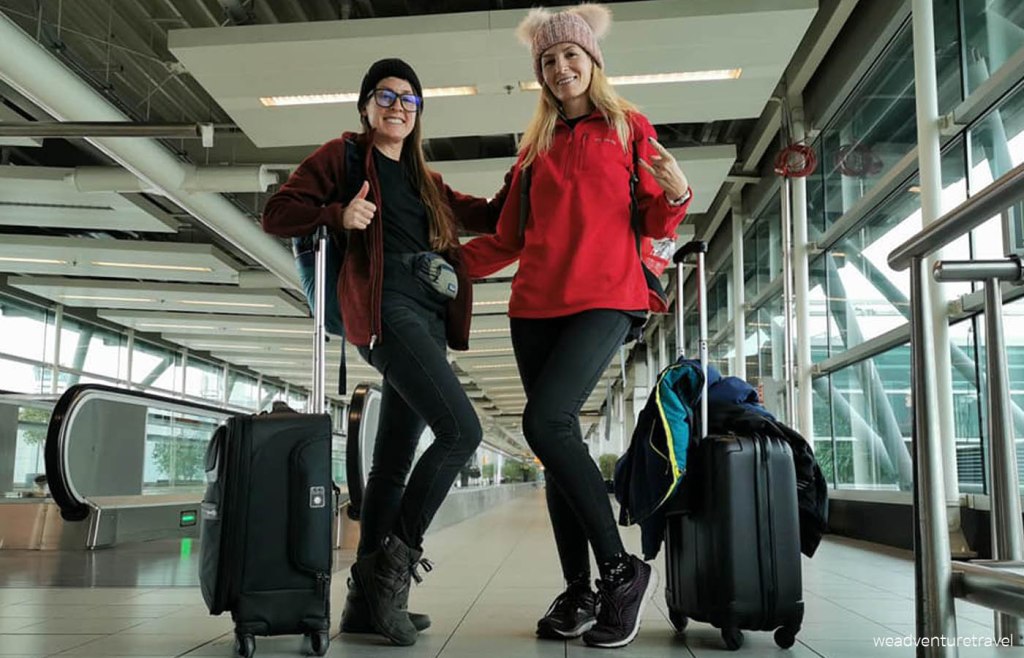
Fast forward to a few months ago when my friend asked me to take a trip for fun and suggested Rome or Amsterdam for the weekend (I’m based in Greece). Please don’t get me wrong as I’ll be the first to tell you these places are very nice, but I guess I had a wild hair up my ass that day (as with most days) because I blurted out “Iceland!” Going to Iceland wasn’t necessarily on her radar, nor was going in winter, but I thought it was a chance to see the northern lights and a great idea.
Be advised that there’s no way to know in advance what kind of weather you’ll have in Iceland the beginning of December – be it rainfall, icy roads or intense blizzards – all of which may limit your travel to an extent. But regardless, be it rain or snow, we became obsessed with the idea of seeing the northern lights and it quickly became the number one reason for going to Iceland in the winter. A part of me figured it was a long shot, but worth the effort anyway.
Download a forecasting app, like Aurora
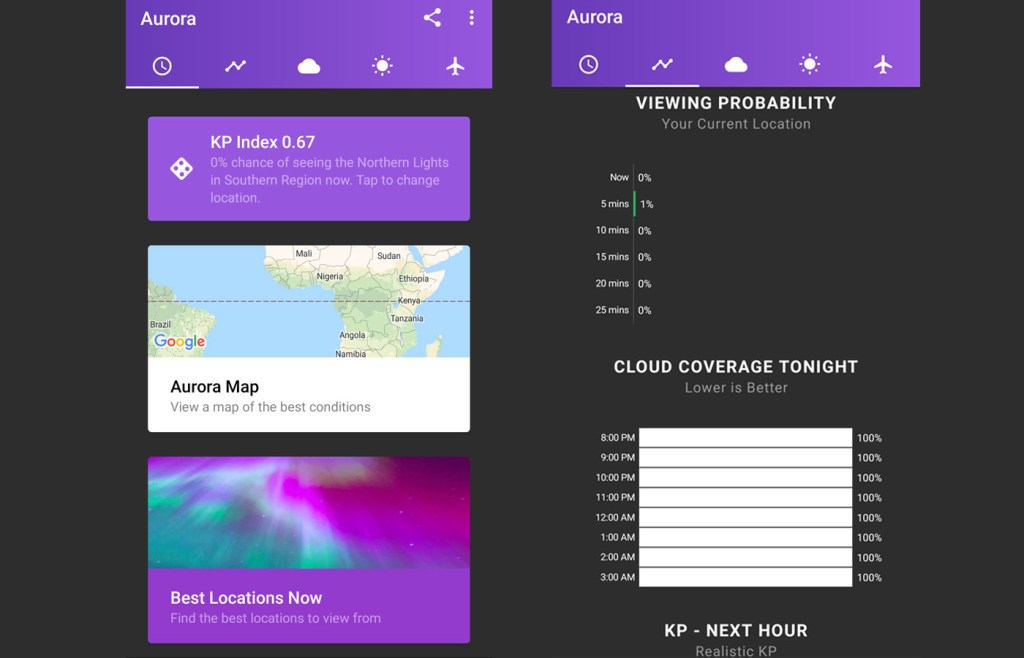
Go to the app store or play store on your Apple or Android phone and download an aurora borealis forecast app. This is the first tool in your arsenal of hunting auroras. Auroras originate from the sun as solar wind and reaches the earth as a stream of charged particles 2 to 3 days after discharge. They form in concentric rings around both of the poles and radiate outwards in spectacular displays. In actuality, the auroras happen year-round, but it requires super dark and clear skies to witness them in full splendor.
Studying an interactive aurora map for a week or two before your trip will allow you to become familiar with the behavior and pattern of the aurora. You will come to understand it better overtime and be able to have a good idea of the time and intensity that it will show up in your particular geographic location. A basic app such as “Aurora” is enough to do the trick and gives you a KP Index for the region – stated as a percentage. A low percentage indicates a less intense aurora or little likelihood when taking into consideration cloud coverage as well. Alternatively, a higher percentage (say 3% and above) is something to really start getting excited about.
Iceland sits at 66 degrees North
While Iceland isn’t exactly in the Arctic Circle, it sits at 66 degrees North which makes it an excellent option from whence to observe the northern lights. In addition, most of the country has little to no light pollution which ensures dark skies, and if the aurora is strong, a vivid display and dance of the phenomena.
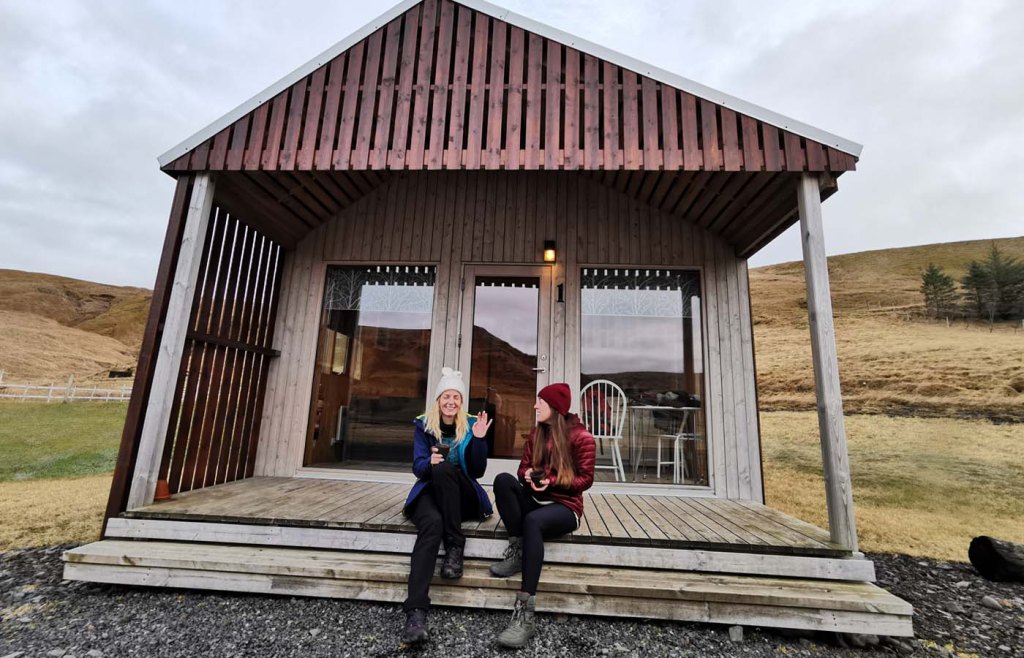
Once we arrived in Reykjavik, the word out on the street was that the best viewing opportunities for the auroras would be along the northwest coast and in the north. We got lucky with a window of good weather, meaning no snow, cold temperatures, but clear skies. Which allowed us to drive a rental car out of town and along the southern coast of the island. Let me just add here that I pretty much figured the south coast would be beautiful, but boy was it ever wow. We stopped for the night in the Vik Valley and stayed in the cozy and little Götur Cottage.
You will never forget your first aurora
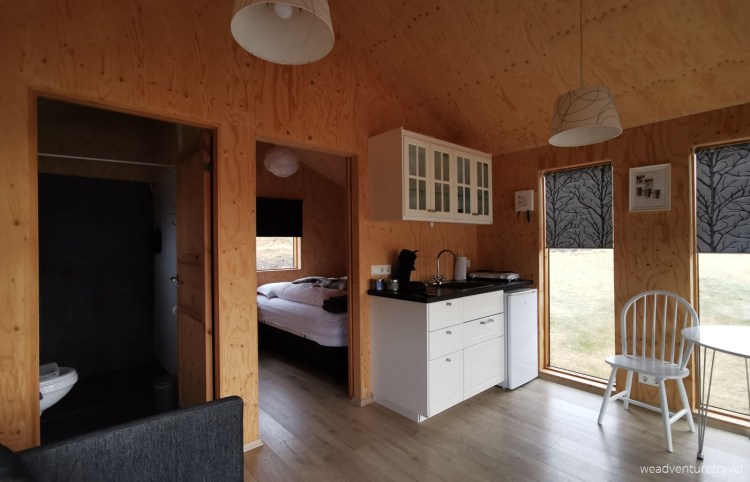
I will never ever forget my first encounter with the beautiful miss a. borealis. I was in the back room of the small cabin unpacking my affairs when I heard a joyful shout … “EEEEE! Oh my god, they are coming! I see them, I see them!” she squealed like a kid on Christmas morning. I mean seriously, I thought she’d seen Santa Clause dropping his drawers. I know I dropped my drawers – the ones I was unpacking and actually holding in my hand at the time – and made a mad dash for the door.
It’s important to understand in advance that images of the aurora all over the internet with bright neon greens, blues, and violets is very different to the reality of seeing the aurora with the naked eye. Sans camera, they appear as strange milky white shape-shifting clouds – although on occasion you can glean a subtle hue of color. It isn’t until you put your camera in manual mode and find the right settings, that stunning colors of the aurora will suddenly appear – along with some handy dandy post-processing software.
No hard and fast rules for shooting the aurora
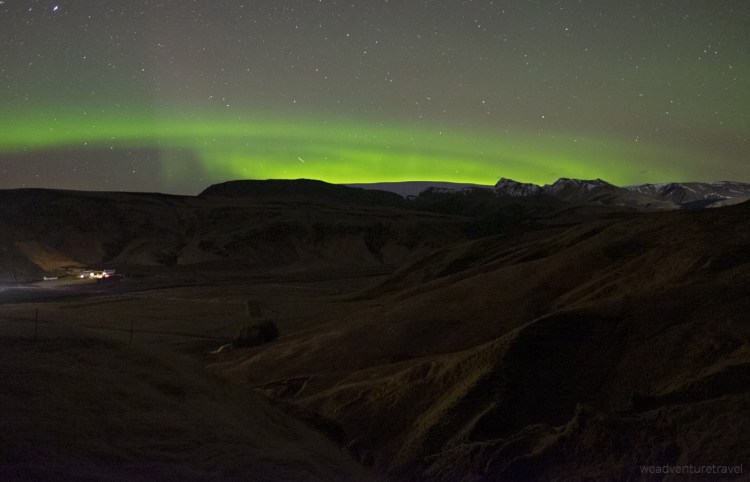
When it comes to shooting the aurora borealis, there isn’t really a hard and fast rule for shooting other than having knowledge of manual camera settings. And a great place to start is with a high ISO, aperture at 2.8, 1.4 or the lowest it will go, and a shutter speed to something like 8-seconds. You’ll need to make adjustments on the fly and as you go, it’s all ballpark in aurora territory. Oh, and last but not least, use a tripod. The aurora had caught us by surprise on the first night, after I had already drunk a half bottle of red wine of course, and in my somewhat drunken stupor I tried handholding the camera the first few shots – which were tragically blurry of course. Fortunately, it didn’t take long for the bitter cold air to wizen me up with a cold slap in the face, and a, duh, grab the tripod silly.
You are unlikely to capture the glory of the northern lights without some sort of a manual camera. Case in point was the couple in the cabin adjacent to ours. While the auroras were happening and I was snapping away with glee and giddy and making merriment, the girl came to ask me in a disappointed way … “does it get better than this? Will we see any colors?”. I explained to her that viewing the aurora with your eye and through the camera are pretty much two entirely different experiences. At which point she lowered her head walked away somewhat downtrodden. Once again, these are important things to know when you go out chasing auroras. Chances are you’ll have invested a lot of time and money to see them, and you want to make every effort count.
Iceland has stunning settings for the aurora
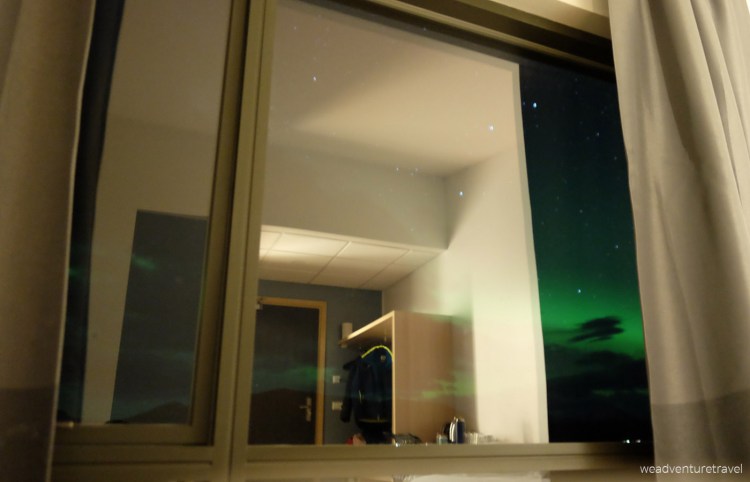
We continued east along the south coast of Iceland and stopped for the night at Lilja Guesthouse on the outskirts of the coastal town, Höfn. This place was not only adorable and cute, but it was clean, and I highly recommend staying there. And, here’s the kicker … the rooms have floor to ceiling windows with a beautiful view of surrounding mountains and Vatnajökull glacier. If the circumstances are right, you can watch the aurora while lying under the covers and in a warm bed. Those of us who have braved the countless hours of bitter cold and dark to catch the auroras will understand what a spectacular treat this is.
With the benefit of hindsight, and if I could do the trip again, I would recommend renting a 4×4 (to take on dirt roads to the base of the glacial tongues in the area) and a pair of stream waders to ford shallow streams and hike up to a spot on the mountain that overlooks the massive and impressive glacier formations. After deciding up on a composition, set your camera up earlier in the day and take multiple shots and exposures, and then again, later when the aurora is out. You’ll be able to stack the images to your liking later, in a program like Photoshop or Lightroom.
 weadventuretravel.com